
Recover · Replenish · Build resilience
Groundwater Recharge
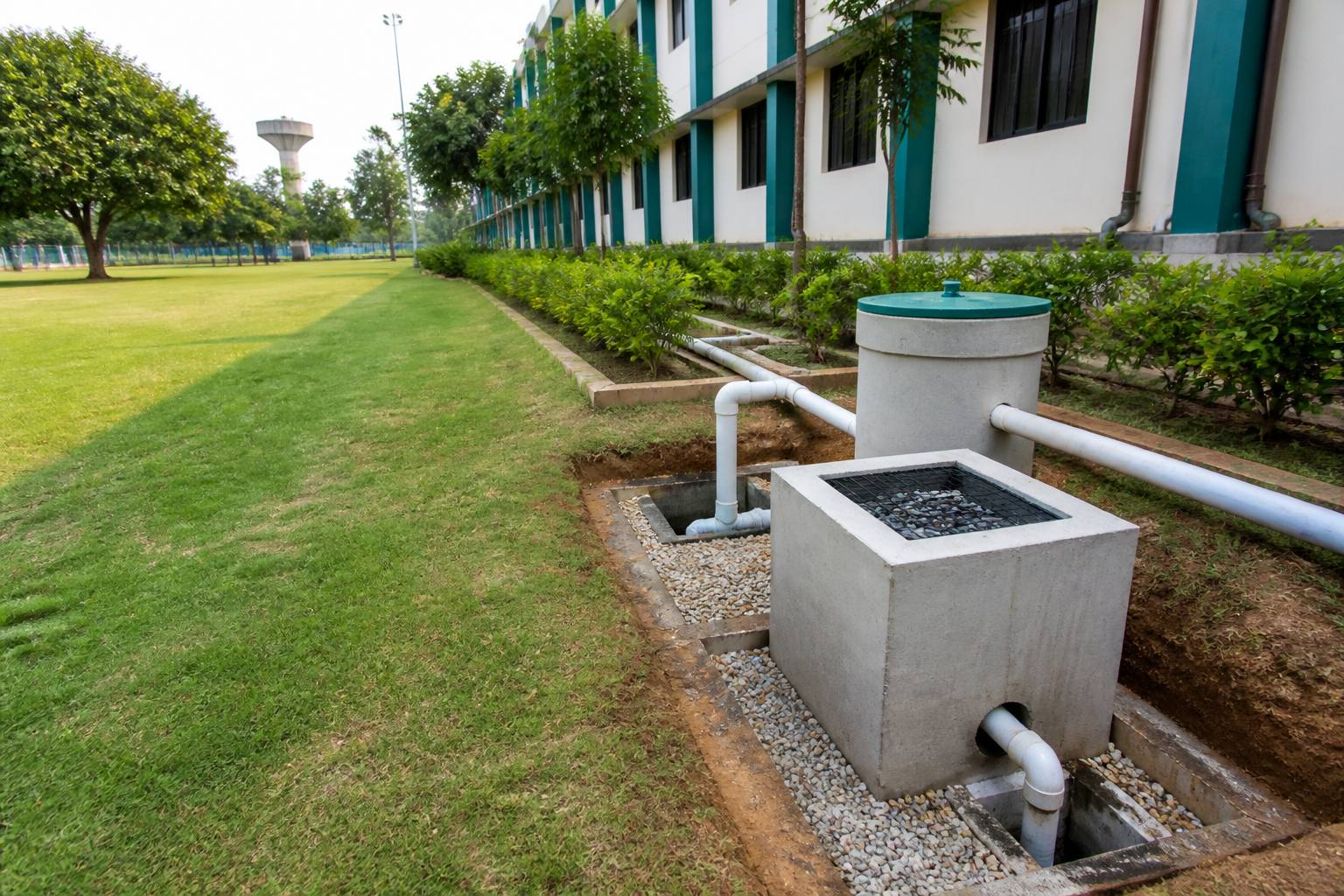
Scientifically planned recharge structures that move suitable rainwater back into the ground.
The project challenge
A recharge structure can underperform or clog when runoff quality, soil, geology, overflow, filtration and maintenance are not considered together. The right location and treatment train matter as much as the structure itself.
What this solution covers
From assessment to a system people can operate.
- 01Recharge feasibility assessment
- 02Recharge pits and trenches
- 03Borewell recharge systems
- 04Silt traps and filtration
- 05Civil implementation
- 06Existing-system rehabilitation
What the programme can support
Reduced runoff and flooding pressure
More resilient groundwater recharge infrastructure
Where it works
Industrial campuses, commercial facilities, institutions and community sites.
01Assess
Understand site, source, demand and constraints.
02Engineer
Design the complete system and implementation scope.
03Deliver
Install, test, commission and document.
04Support
Maintain performance through monitoring and service.
Frequently asked
Questions from project teams.
How does SWR decide whether recharge is suitable?+
We consider catchment quality, runoff, soil, hydrogeology, groundwater conditions, overflow routes, construction constraints and future maintenance.
What recharge structures can be planned?+
Depending on the site, the scope may include pits, trenches, shafts, borewell recharge, silt traps, filtration and rehabilitation of existing systems.
Can recharge be combined with rainwater harvesting?+
Yes. Collection, first-flush treatment, storage, reuse and recharge can be designed as one connected water-conservation programme.
Start with your site