
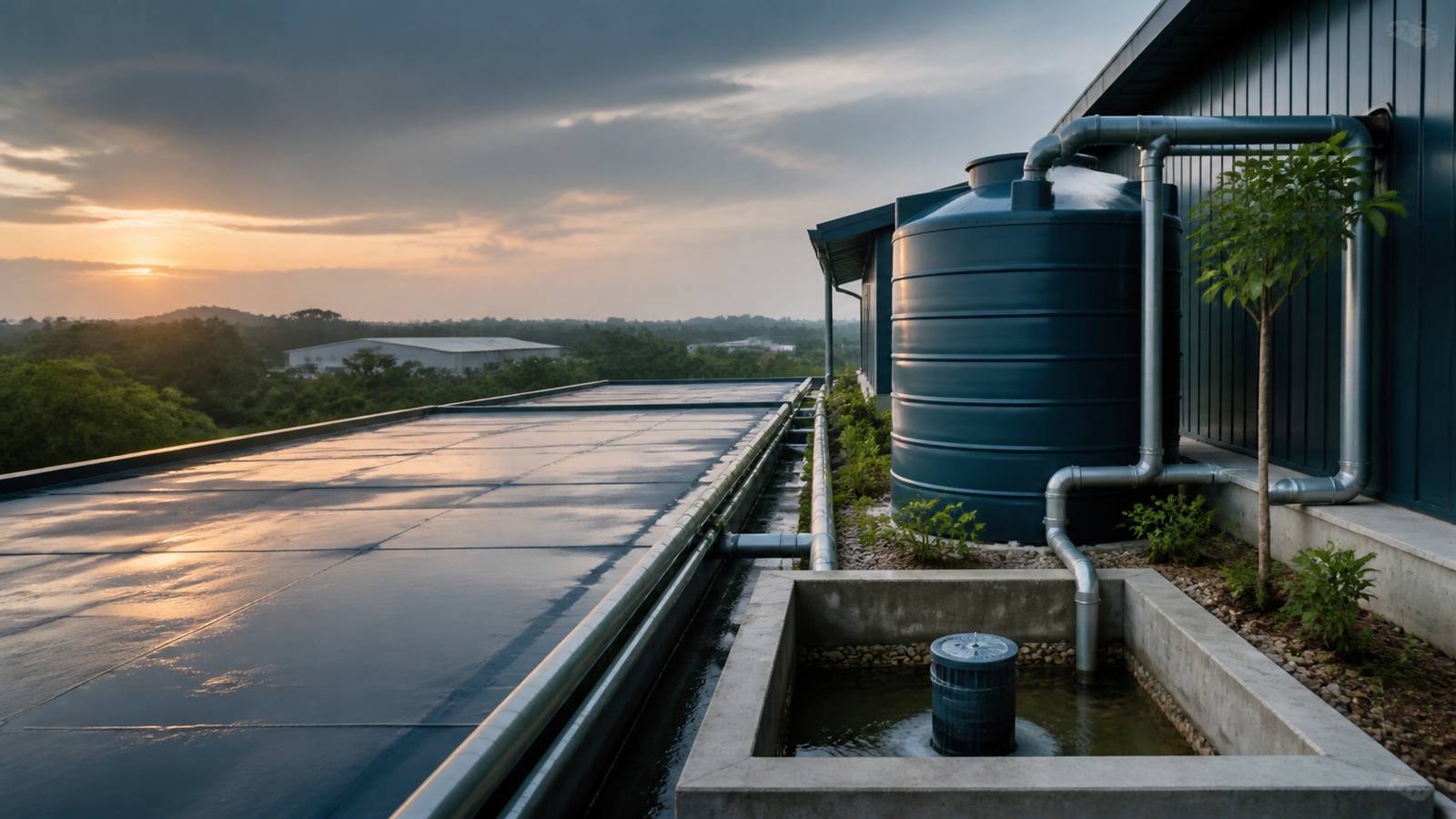
Capture · Filter · Store · Recharge
Rainwater Harvesting
Use rainwater wisely, from catchment assessment and filtration to storage, reuse and scientifically planned groundwater recharge.
The project challenge
Many sites lose useful monsoon water because roofs, drainage, storage, reuse and recharge are planned separately. A workable system must match the catchment, rainfall pattern, demand and maintenance reality of the facility.
What this solution covers
From assessment to a system people can operate.
- 01Rainwater harvesting consultancy, site assessment and surface-runoff mapping
- 02Rooftop rainwater harvesting, filtration and first-flush systems
- 03Rainwater storage tanks and non-potable reuse networks
- 04Groundwater recharge pits, trenches and borewell recharge
- 05Water balance and rainwater potential reports
- 06Revival and performance improvement of existing systems
What the programme can support
Lower freshwater and tanker dependence
A maintainable recharge and reuse asset
Where it works
Industries, warehouses, commercial campuses, schools, hospitals, government blocks, ashrams and old-age homes.
01Assess
Understand site, source, demand and constraints.
02Engineer
Design the complete system and implementation scope.
03Deliver
Install, test, commission and document.
04Support
Maintain performance through monitoring and service.
Frequently asked
Questions from project teams.
Can harvested rainwater meet industrial demand?+
It can offset suitable non-potable demand when catchment yield, storage, treatment and the site's water balance support it.
How is rainwater storage capacity planned?+
Storage is assessed against rainfall timing, roof and surface catchment, expected runoff, demand pattern, available tank space, overflow route and whether water will be reused or directed to recharge.
What does SWR assess before designing the system?+
We review roof and surface catchments, rainfall, runoff paths, water demand, storage options, soil and hydrogeology, reuse opportunities and maintenance access.
Can an existing rainwater system be improved?+
Yes. SWR can assess blockages, filtration, storage, recharge performance and maintenance gaps, then propose practical upgrades.
Start with your site