
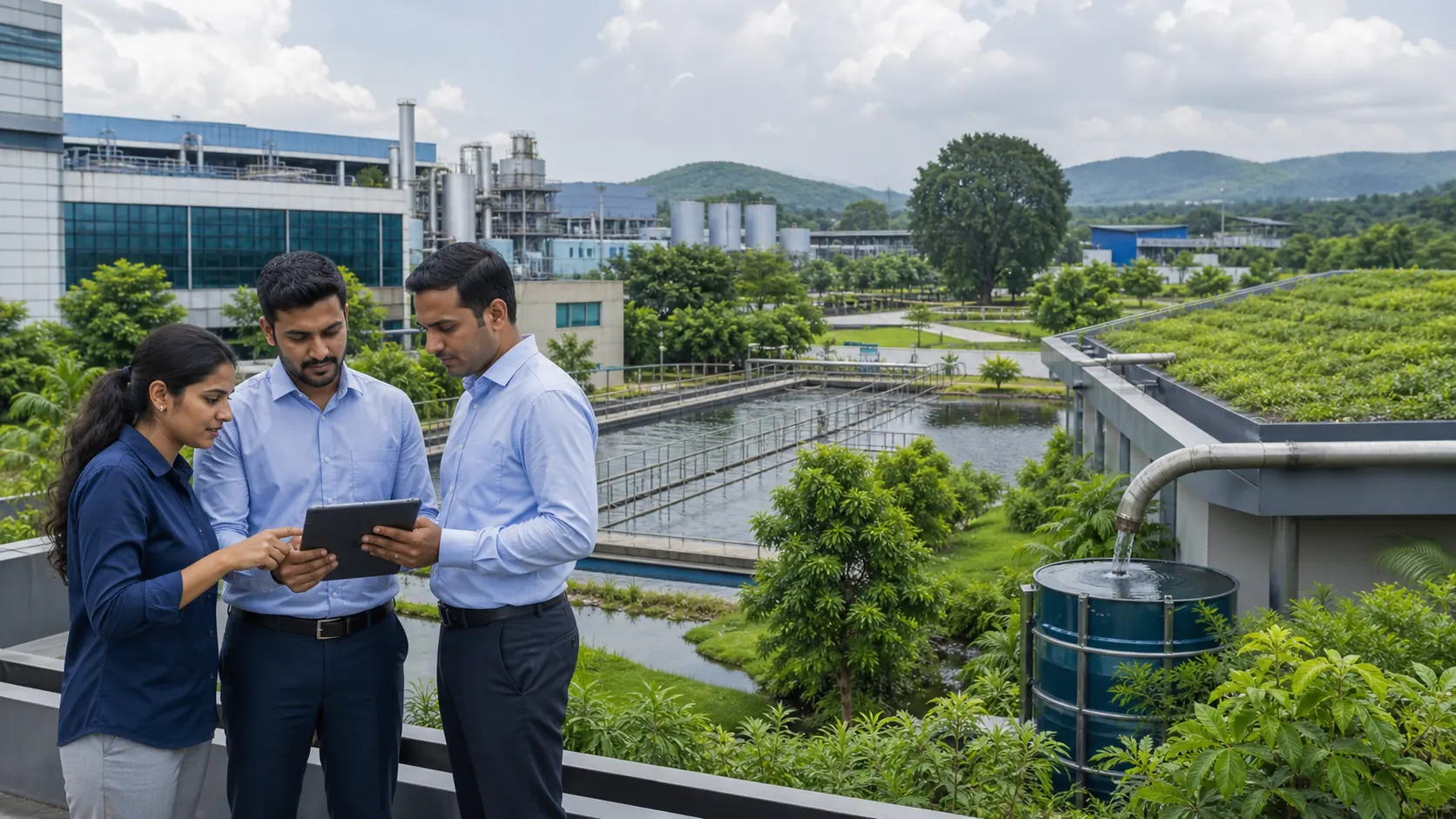
Water connects operations, environmental responsibility and community relationships. It can interrupt production, increase cost, affect permits and create local concern when sources are stressed. It can also become a strong ESG programme when a company understands its water context, measures withdrawals and discharge, reduces demand, reuses water responsibly and invests in durable community infrastructure.
Start with context, not a generic target
A kilolitre saved has different significance in a water-stressed basin and a water-abundant location. Map each facility's sources, catchment, seasonal availability, competing users, regulatory setting and exposure to flood or drought. Consider how suppliers and communities depend on the same water resources. This context helps prioritise sites where intervention matters most.
Corporate targets should then translate into facility action. A percentage reduction can be useful, but teams also need absolute withdrawal, consumption, discharge, reuse and water-quality measures. Growth plans should explain whether intensity improvements are reducing total pressure or merely slowing its increase.
Build reliable water data
A credible programme begins with source and user metering. Reconcile groundwater, municipal supply, tankers, surface water and harvested rainwater with process use, domestic use, losses, treated output, reuse and discharge. Investigate unexplained gaps instead of presenting a perfectly balanced spreadsheet unsupported by instruments.
SEBI's BRSR format includes water withdrawal by source, consumption, intensity and discharge by destination and treatment level. Even companies outside mandatory reporting can use these categories to improve internal discipline. Define boundaries, units, estimation methods and responsibilities so data remains comparable across facilities and years.
Follow the water hierarchy
The most durable sequence is to avoid unnecessary demand, improve efficiency, reuse suitable streams, harvest rainwater and replenish sources where scientifically appropriate. Leak repair, submetering, cleaning controls and cooling optimisation may deliver fast results. Treatment and recycling can then address remaining demand with a system sized around actual flows.
Rainwater harvesting can combine storage, reuse and groundwater recharge. Wastewater treatment can support cooling, flushing, gardening or process needs when quality is fit for purpose. The objective is an integrated water system rather than isolated installations competing for budget and attention.
Connect operations, compliance and governance
Water performance depends on engineering and management. Assign executive oversight, facility ownership and clear operating roles. Bring sustainability, environment, utilities, finance, procurement and production teams into investment decisions. Review abstraction permissions, consent conditions, water quality, monitoring, maintenance and emergency response alongside consumption targets.
Governance should include data checks, calibration, internal review and corrective action. Claims such as water positive or zero liquid discharge need precise boundaries, methods and evidence. Communicate progress with appropriate caveats rather than turning a complex local resource into a marketing slogan.
Design community and CSR projects for lasting value
Companies can extend impact through school drinking-water systems, rainwater harvesting, groundwater recharge, pond rehabilitation, solar energy and efficient irrigation. The project should respond to a verified need and include source quality, users, capacity, land, permissions, ownership and maintenance. Infrastructure without local stewardship can stop delivering value soon after handover.
Define outcomes such as people served, system uptime, water quality, storage restored, recharge potential or irrigated area. Train local operators, plan consumables and establish escalation. Community feedback and post-commissioning visits make impact reporting more meaningful than a count of installations.
Create an investable roadmap
Prioritise actions by water risk, regulatory need, financial return, feasibility and stakeholder value. Separate immediate operational improvements from capital projects and watershed initiatives. For each action, state baseline, owner, budget, timeline, expected water outcome and verification method. This lets management compare projects on more than narrative appeal.
Review the roadmap annually as production, climate, regulation and community conditions change. Strong industrial water management does not depend on one perfect project. It is a repeatable cycle of assessment, action, measurement and improvement that protects operations while demonstrating responsible use of a shared resource.
Choose metrics that guide action
Useful operational indicators include freshwater withdrawal, total consumption, recycled-water use, rainwater captured, discharge volume, treatment recovery, water intensity, system uptime and quality compliance. Present absolute and intensity figures together. A falling intensity can still accompany rising total consumption, while a temporary production slowdown can make performance appear better without any engineering improvement.
Each metric needs a defined boundary, owner, source and review frequency. Distinguish measured data from estimates and document conversion factors. Facility teams should see monthly trends, while management can review consolidated performance and exceptions. Good dashboards direct attention to leaks, abnormal demand, plant downtime and sites that need investment.
Prepare for physical and transition risks
Physical water risks include scarcity, variable quality, floods, drought and competition for local sources. Transition risks include changing regulation, customer expectations, disclosure requirements and the cost of new infrastructure. Scenario planning can test how a facility would operate if groundwater permission changed, tanker supply tightened or monsoon patterns became less dependable.
Responses may include diversified sources, additional storage, treatment and reuse, supplier engagement, emergency operating procedures and catchment projects. The goal is not to predict one future perfectly. It is to identify decisions that improve resilience across several plausible conditions and to make those actions visible in capital planning.
Key takeaways
- Assess water risk in its local basin and community context.
- Reconcile withdrawals, consumption, reuse and discharge with reliable data.
- Use efficiency, recycling, harvesting and recharge as one hierarchy.
- Report outcomes conservatively with clear boundaries and evidence.