
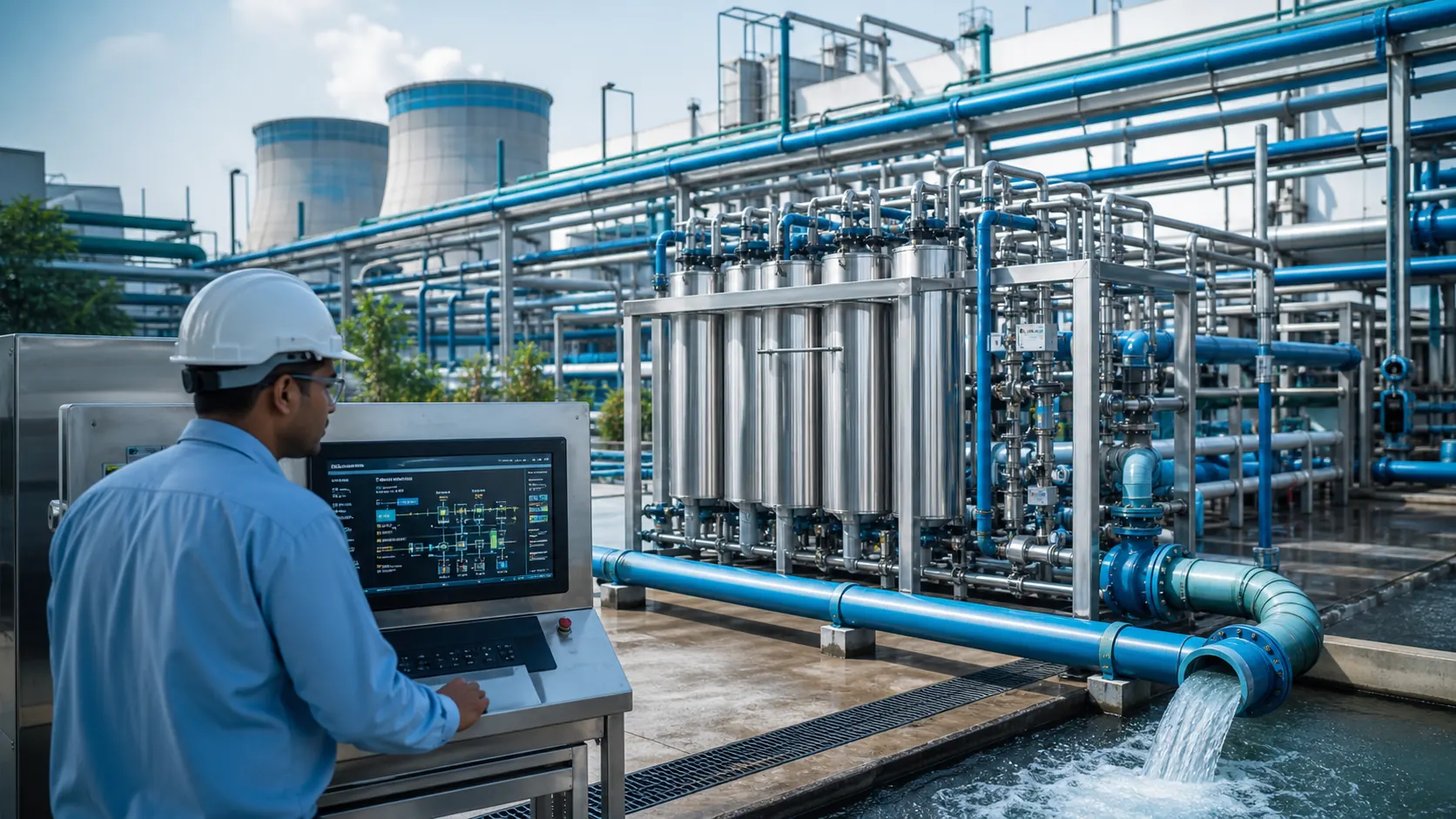
Water recycling creates value when treated water replaces a more expensive or scarce source without creating new operational risk. The savings can extend beyond the water bill to tankers, pumping, treatment, discharge and production continuity. However, a reuse project should be built on a measured water balance and fit-for-purpose quality, not the assumption that every litre must be treated to the highest standard.
Calculate the full cost of incoming water
The invoice price of municipal water or groundwater charges rarely represents the total delivered cost. Include tanker purchase, unloading delays, pumping energy, pretreatment, softening, chemicals, testing, storage, manpower and administrative effort. For groundwater, include monitoring, compliance, maintenance and the business risk of declining availability or tighter abstraction limits.
Map these costs by source and season. A facility may have inexpensive supply for most of the year but depend on costly tankers during summer. Recycled water that displaces those peak purchases can be attractive even if it does not replace the cheapest annual source. Use a cost per usable kilolitre so alternatives can be compared fairly.
Find suitable reuse matches
Start with major demands that do not require potable quality. Common opportunities include cooling-tower makeup, toilet flushing, gardening, floor washing, dust suppression and selected process uses. Then identify available streams such as treated sewage, process rinse water, cooling-tower blowdown, condensate and filter backwash. Each source and use should be quantified and characterised.
Match quality to purpose. Requiring drinking-water quality for every application increases capital, energy and reject generation. At the same time, inadequate treatment can cause scaling, corrosion, fouling, odour, health risks or product-quality problems. A source-to-use matrix makes these trade-offs visible and helps prioritise the easiest, highest-value loops.
Design for recovery and residuals
Treatment recovery determines how much feed becomes reusable water. Pretreatment, biological treatment, filtration, ultrafiltration, reverse osmosis or disinfection may be combined depending on the source and target. Every process also produces residuals such as sludge, backwash or membrane reject. Their quantity, quality and destination must be included in the design and cost model.
A high-recovery system can be attractive, but pushing recovery beyond stable operating limits may increase scaling, cleaning and downtime. Pilot testing or treatability studies are useful when quality varies or the reuse target is demanding. The optimum is the most reliable lifecycle result, not simply the highest percentage printed in a proposal.
Count avoided costs and resilience value
Direct savings include reduced freshwater purchase, fewer tankers and lower discharge or external treatment volumes. Indirect savings may come from lower production interruptions, reduced tanker traffic, more stable utility quality and less time spent arranging emergency supply. Some projects also avoid capacity expansion in freshwater or wastewater infrastructure.
Build the business case with conservative volumes, actual tariffs and documented operating costs. Include power, chemicals, consumables, membranes, sludge disposal, labour, maintenance and replacement reserves. Test the payback against lower utilisation and higher operating cost. A robust project should still make sense when conditions are less favourable than the headline scenario.
Meter the loop and manage performance
Install meters at the source, treatment inlet, product-water outlet, reject and major reuse destinations. Monitor quality parameters that protect the application, along with pressure, energy and chemical consumption. This allows the team to calculate recovery, unit cost and freshwater substitution rather than reporting only installed capacity.
Define alarms and responsibilities for off-specification water. Provide safe diversion or retreatment so poor-quality water does not reach cooling systems, landscaping or processes. Preventive maintenance, calibration and operator training should be funded from the beginning. Recycling saves money only while the plant runs reliably and users trust the water it supplies.
Start with efficiency, then recycle
Recycling should not hide avoidable consumption. Repair leaks, improve cleaning practices, optimise cooling cycles and reduce unnecessary overflows before sizing treatment. Lower demand can reduce both freshwater purchases and the capacity of the recycling plant. It also makes the final system easier to operate.
A phased programme often works well: establish metering, complete the water balance, implement low-cost conservation, reuse the simplest streams and then add treatment for more challenging loops. This approach creates early evidence and informs future investment. The objective is not a complex plant; it is a dependable water system with lower cost, lower risk and better use of every available source.
Build a decision-ready baseline
Collect at least several months of source, use and discharge data, then validate it with short-term measurements where meters are missing. Record seasonal tanker prices, operating interruptions and quality variation. A transparent baseline gives finance and operations teams one set of assumptions and makes later savings verifiable rather than anecdotal.
Key takeaways
- Use the full delivered cost of water in the business case.
- Match each treated stream to a fit-for-purpose use.
- Include reject, sludge, energy and maintenance in lifecycle cost.
- Meter freshwater substitution and cost per kilolitre after commissioning.